Case Study
Transforming PI Management at Autolus: From Manual Burden to Digital Efficiency
Jan 9, 2026
Integrated digital PI management is not just a tech upgrade - it’s a compliance and efficiency imperative. Discover how a leading ATMP (Advanced Therapeutic Medicinal Products) company eased the burden of constant PI updates with a slicker approach.

The Background on a complex PI process
In the Pharmaceutical industry, managing prescribing information (PI) is a complex, compliance-critical process. For Autolus, an advanced therapeutic medicinal products (ATMP) company, meeting high standards when delivering this information to healthcare professionals is even more imperative.

The challenge is further compounded as the Pharma company relies on a wide range of communications, such as marketing materials, to raise awareness of new product information which would sit in a variety of places.
What are the challenges of manually managing PI?
Those responsible for managing and updating PI at Autolus were tasked with updating information, strict version control and resource-heavy workflows. This all had to run like clockwork in order to comply with the ABPI Code of Practice following an SmPC change. This responsibility was particularly demanding for Nina Kabir, Commercial Lead (UK), Senior Director, who oversees their range of functions and aligns multiple stakeholders to ensure their tasks are completed on time.

Previously, the organisation relied on a breadth of manual tasks each time the PI was updated:
- The PI updates were followed by an urgent meeting, PI withdrawal, putting together briefing documentation, and re-approvals of updated materials.
- Regulatory teams would send updates about the PI change internally via email.
- Medical teams jumped on the task to assess the range of impacted materials before assigning new design changes to an agency.
- Compliance demanded auditable proof of withdrawals and destruction of outdated materials.

The time taken away from their valued people was striking, as Nina explained:
“From withdrawal to material update, it would comfortably take someone at least three weeks, and that’s just for one update. It could take even longer, as the design agency needs to allocate resource to your project, and then you've got to review the design.”
As typical with pharmaceutical organisations, many stakeholders would be involved in PI updates. It was an ever-present internal challenge to ensure everyone remained on the same page and to establish version control across the organisation.
“As soon as that update comes from Regulatory, I need to consider how they then inform Marketing and Medical, and then look at the spectrum of materials there are. We need to be fully aware of what’s in circulation, while there are always materials being produced in the pipeline.”

“My advice is to get the Regulatory people on board. They need to see the value of this and what it brings to their organisation. And it’s not just for them in terms of the resource and time-saving, but also for the Commercial functions as well.”
- Nina Kabir, Commercial Lead (UK), Senior Director, Autolus
The process added frustration across teams. Field reps were left waiting on updated materials, and compliance audits required extensive documentation to demonstrate how they were keeping information up-to-date and in line with the ABPI Code of Practice.
The moment to champion change
Having become aware of emc compliance’s pi portal app through a previous role, Nina explored this solution as an answer to Autolus’s PI headaches. The following advantages drove this rationale:
- Eliminating manual updates for their own materials.
- Ensuring compliance through automated version control.
- Reducing the resource burden across their Medical, Regulatory, and Field teams.
A pre-requisite with any updates to the PI will be reflected through internal copy approval process, to ensure the document is version controlled, and job codes are updated accordingly.
Stakeholder buy-in was critical, as Nina emphasised:
“It’s not just Commercial or Medical. You need the Regulatory functions to get on board. As they own the PI, they have to take ownership of the pi portal app.”
What made the adoption of pi portal successful?
Removing such a burden would require a huge transformation in PI management. Here’s how the pi portal app came into play:
- Once the SmPC was updated on emc (electronic medicines compendium), this was reflected automatically within the PI - Regulatory teams would update any additional information within the PI, such as adverse event text or pricing, within the emc pi portal app.
- New QR codes could be generated easily within the app, and when embedded in promotional materials, would be automatically linked to the latest PI.
- Having compliance maintained digitally removed the need to recall or destroy hard copies.
As Nina described:
“Every time PI is updated, my regulatory counterpart goes into the app, updates it, and then I don’t need to do anything. It’s done seamlessly. And QR codes are a game-changer - you add a QR code into the process and that’s it. It goes on everything.”
How are Autolus benefiting from using pi portal?
The biggest benefit of using pi portal for Autolus was freed-up resources, with instant updates that previously took weeks, as well as budget saved from design agency fees.
Just as importantly, their Compliance function was given great confidence that they have an auditable trail of updated information. Additionally, improved version control would benefit not just Medical, Marketing or Regulatory, but also Field Sales when sharing the latest information with HCPs, who could access the PI via QR codes, thus eliminating bulky materials.
“My advice is to get the Regulatory people on board. They need to see the value of this and what it brings to their organisation. And it’s not just for them in terms of the resource and time-saving, but also for the Commercial functions as well.”
Talk to Datapharm about how your PI processes can be managed without the headaches
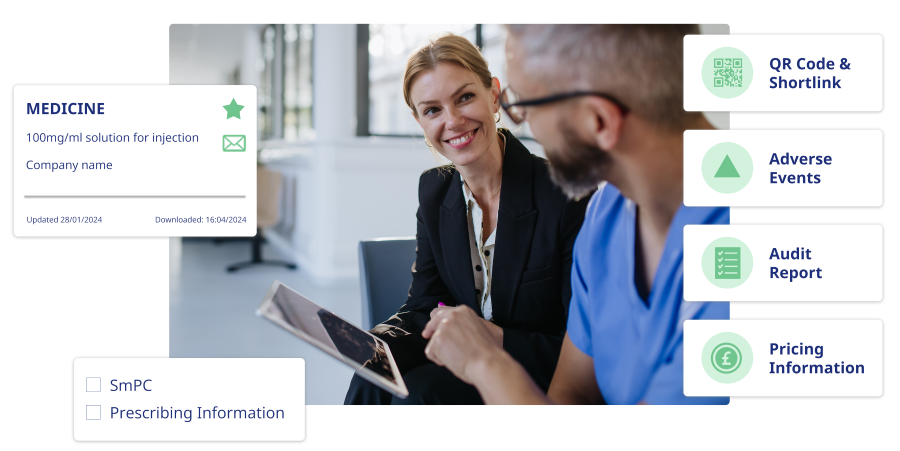
Datapharm, the provider of emc, has been serving Pharma companies publishing their regulated medicines information in the UK for over 50 years. Today, emc compliance is used by over 60 Pharma companies to automate their updating and sharing of PI, and even supports MSLs to share the latest SmPC information with HCPs while out in the field, whether online or in an offline hospital setting.
Book a short call with one of our team to discuss how you can address your current PI management challenges: